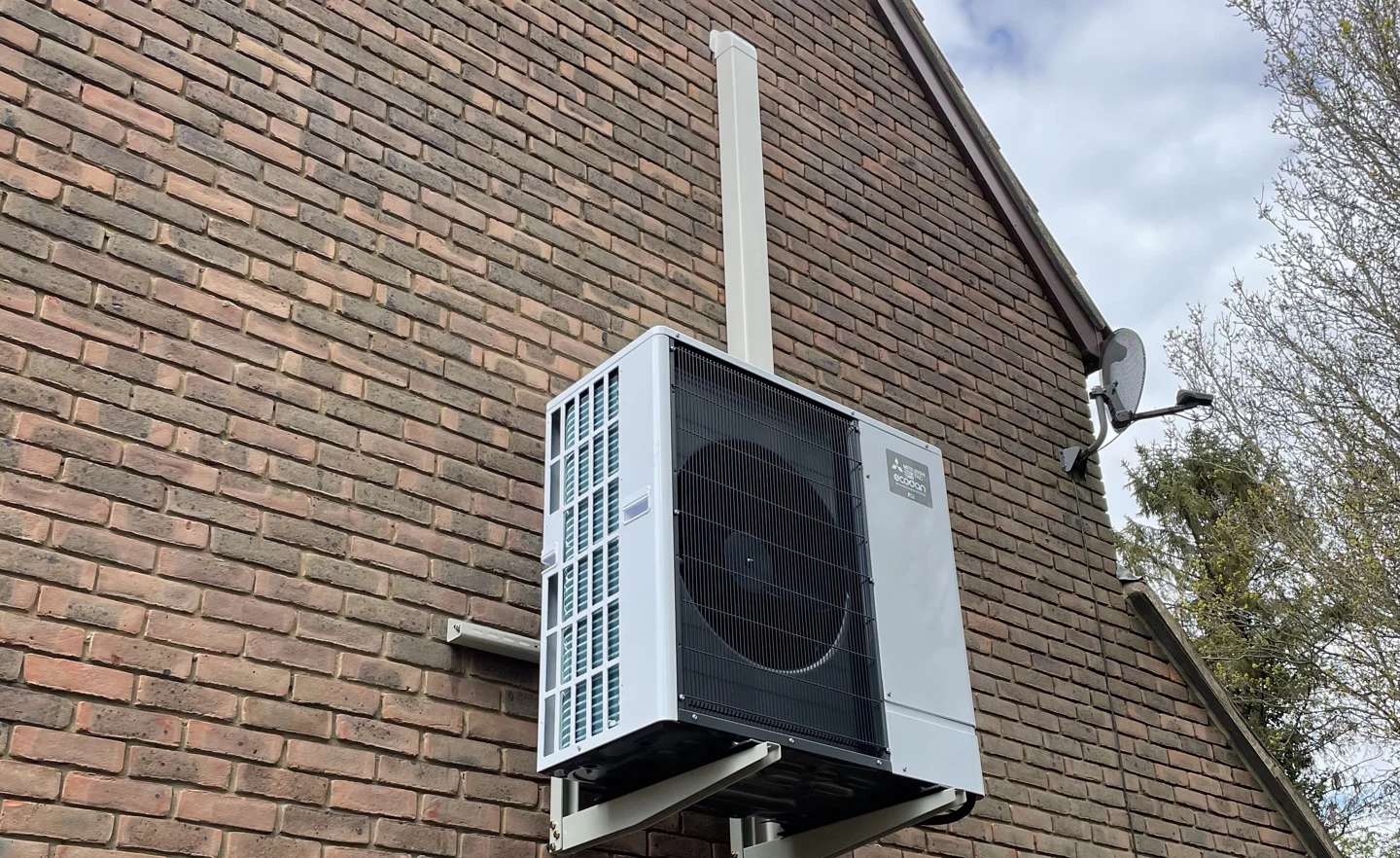
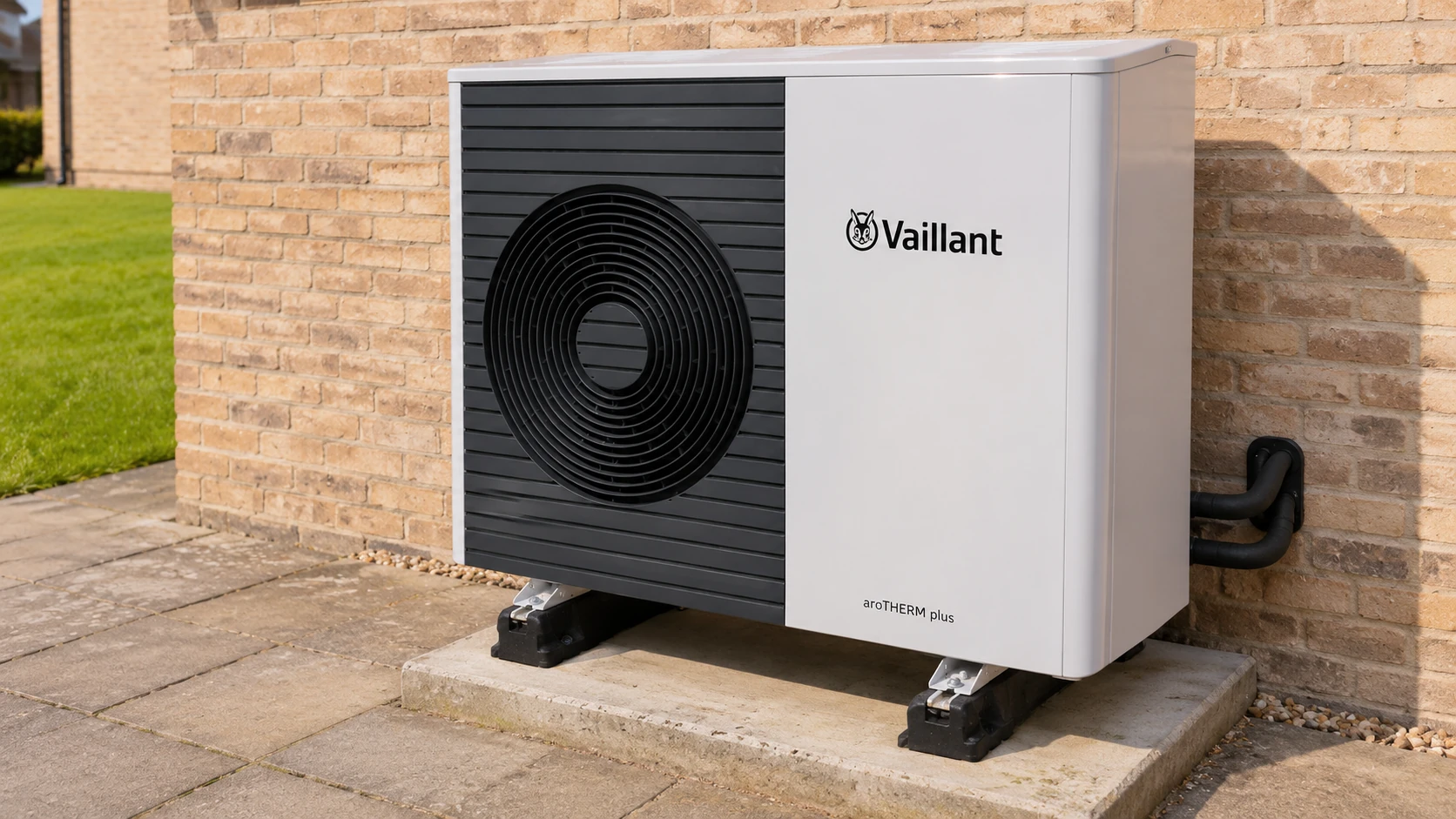
If you are replacing a gas or oil boiler, a grant may help with a suitable heat-pump installation without requiring you to buy solar panels or a battery at the same time. Start by establishing what your home needs, then check the funding category and what you would pay. A headline grant figure cannot tell you whether radiators, a cylinder or other work are included.
Grant information checked on 18 November 2026. Confirm the current rules with your installer before agreeing the work; a planned survey or installation date does not itself secure funding.
How much is the Boiler Upgrade Scheme grant?
The government grant schedule lists the following heat-pump categories. These are contributions towards eligible installations, not prices for a complete heating upgrade.
| Installation | Grant position |
|---|---|
| Eligible air-to-water heat pump | £7,500 |
| Eligible ground-source heat pump, including water-source | £7,500 |
| Qualifying off-gas oil or LPG replacement with an air-to-water or ground-source heat pump | £9,000 total, including the temporary £1,500 uplift |
| Air-to-air heat pump | £2,500 listed category; certified installation and scheme access must be available |
The £9,000 award is the total grant, not £9,000 added to the standard award.
There is one BUS grant per property. Replacing an existing low-carbon heating system and fossil-fuel hybrid systems are excluded under the published grant conditions. Do not assume that buying two units creates two grants.
Could my property qualify?
BUS covers England and Wales. You must own the property. Existing gas, oil, LPG or non-heat-pump electric heating may be replaced, subject to the system and property rules. The government eligibility guide also covers landlords and second homes.
- Previous funding: tell the installer about any earlier public support for a heat pump or biomass boiler. Insulation funding alone does not automatically rule the home out.
- Property history: most new builds and social housing are excluded. Qualifying self-builds have a separate route; a completed developer-built home needs its own eligibility check.
- Existing equipment: explain what provides space heating and hot water now. Include secondary systems and any heating equipment that has already been removed.
Bring the facts rather than trying to decide eligibility from the age or appearance of the building. A rural address, an old boiler or an insulation recommendation is not enough to establish an award. If ownership, previous funding or the heating history is unusual, flag it before the quotation assumes a grant.
Funding suitability and heating suitability are separate checks. Our guide to whether a heat pump is right for your home explains the design questions to discuss alongside the funding assessment.
Who can receive the £9,000 heat-pump grant?
The temporary award is for eligible properties with no mains-gas connection under the scheme definition, replacing oil or LPG heating with an air-to-water or ground-source heat pump. Applications must be properly made from 21 July 2026 to 31 March 2027. These conditions come from Ofgem’s current property-owner guidance, version 5.2.
Coal or direct-electric heating does not satisfy the oil/LPG condition for this uplift. Such a property may still qualify for the standard award if the wider rules are met. Self-builds cannot receive the uplift, although eligible self-builds may receive £7,500.
The off-gas definition also matters: capped or clamped gas supply points still count, existing gas-meter records are relevant, and heat-network connections and new builds are excluded. Tell the installer about any gas connection even if the household currently buys oil. Do not assume disconnecting a meter will establish eligibility.
Ofgem considers an application properly made only when it has the necessary eligibility information, owner consent and identity verification. Its guidance page explains this distinction. Sending an incomplete application just before the deadline is not the same as meeting it.
Who applies, and what do I need to do?
You choose an MCS-certified installer, agree the quotation and have that installer apply to Ofgem. The grant must be shown as an upfront deduction on the quote and invoice. GOV.UK explains the installer-led application process. It is not a cash payment sent to your bank account.
- Agree the project: make sure you understand the equipment, installation work, exclusions and remaining price before accepting.
- Prepare the evidence: provide accurate owner and property details, information about the heating being replaced and the funding history. Ask what photographs or fuel records are needed before old equipment is removed.
- Check the application details: confirm the address, contact email and proposed technology with the installer. Keep the application reference with your project paperwork.
- Respond to Ofgem: complete the consent and identity requests promptly. If you cannot use the online route, tell the installer at the outset so support can be arranged.
The usual consent response period is 14 days; Ofgem allows 28 days through its assisted digital route. Consent to a BUS application is separate from the contract for the work. Ofgem’s homeowner information and detailed guidance explain the process.
Do not sign or confirm a statement you cannot verify. For example, if you are uncertain about earlier grant support at the property, ask how it will be checked. Raising that uncertainty before submission is more useful than discovering a mismatch after work starts.
What should a grant-inclusive quotation show?
Compare the completed project, not just the amount shown after the grant. Ask for three figures together: the full price, the grant deduction and the balance payable. Then check what each proposal actually includes.
| Part of the proposal | What to establish |
|---|---|
| System design | Which heat pump is proposed, what heat-loss assessment supports it and how heating and hot water will be provided. |
| Equipment and alterations | Whether radiators, cylinder, controls, pipework and electrical changes are included or provisional. |
| Work around the installation | Who provides the base, access, removal of old equipment, building work and making good. |
| Grant assumption | Which category is shown and what, if anything, still needs verification. |
| Customer payments | The remaining total, payment stages, and how agreed variations will be priced. |
| Changes or funding refusal | What the contract says about delayed work, a changed design or an unsuccessful grant application. |
Scroll across to compare all columns.
A fixed grant can leave very different balances on two homes. It also does not prove that a cheaper proposal is better value: a missing cylinder alteration or electrical item can change the comparison. Ask for exclusions in writing and allow for work you have agreed to arrange separately.
Where a grant application is rejected or a voucher is revoked, responsibility for the deducted amount can depend on your agreed contract. Check this before proceeding, particularly if work is proposed before a voucher is issued. Ofgem discusses the grant discount and this contractual issue.
Our renewable installer guide can help you compare the proposal, certification and aftercare as well as the price.
Which application and voucher dates matter?
Keep three milestones distinct: the completed application, the voucher’s expiry and the finished installation with its redemption evidence. Ask the installer to record your project’s actual dates and who is responsible for each action.
| Milestone | What it means for the project |
|---|---|
| Properly made application | The application must meet the relevant rules, including the temporary uplift window where applicable. |
| Voucher issue and expiry | Check the dates on the issued voucher. Air-to-water vouchers normally have a three-month validity period; ground-source vouchers have six months. |
| Installation and commissioning | For work arranged after voucher issue, complete and commission the system before expiry. A retrospective application has separate timing rules. |
| Voucher redemption | The installer must make the redemption application, including required evidence, properly before expiry. Finishing the physical installation alone is insufficient. |
Scroll across to compare all columns.
These distinctions follow Ofgem’s installer guidance, version 5.2, including the voucher validity table. If delays arise, an expired voucher cannot simply be extended. A fresh application may be possible, but renewed funding is not guaranteed.
Use the expiry date to plan backwards with the installer: leave time for equipment delivery, electrical work, access and any information requested during redemption. If the design or installation date changes, ask immediately whether the voucher and funding assumptions still fit. Do not wait until the final week to resolve an outstanding item.
Retrospective applications are possible in limited circumstances, but installing before approval carries a funding risk. Ask the installer to establish the applicable commissioning and application dates before you agree to that approach. Ofgem’s homeowner guidance explains the risk; an installation invoice is not proof of grant entitlement.
Can a loan help with the remaining cost?
A grant and a loan do different jobs: the grant reduces the eligible installation cost; borrowing creates repayments. The Warm Homes Loan Scheme rules expressly allow an eligible loan alongside BUS for the remaining cost, subject to both schemes’ conditions and lender approval.
Show the lender the complete quote and grant assumption. Ask it to confirm the amount it will finance, the total repayment and when payments start. Do not treat approval for one form of support as approval for another, or count the same cost twice. You must become the legal owner of the installed system under BUS’s ownership rules; ask the lender and installer to confirm this.
This guide does not confirm access to a particular loan through EPC. Establish the payment options available for your own project before committing to work.
What should I keep after installation?
Keep the quote, agreed variations, final invoice, MCS installation certificate and grant correspondence together. Check that the agreed deduction appears in the final account and ask the installer to explain any change.
A good handover should also leave you knowing how to use the heating controls and whom to contact for support. Ask the installer to demonstrate the settings for everyday use, explain servicing arrangements and record any outstanding work. Completing the funding paperwork and understanding your new heating are both part of finishing the project.
If the heat pump sits within a wider renovation, use our whole-home energy upgrade guide to discuss the order of work. Give the heating installer sight of any planned insulation, electrical or room-layout changes before the design is finalised.
Common questions about the Boiler Upgrade Scheme
Do I need a new Energy Performance Certificate before applying?
A valid Energy Performance Certificate is no longer a universal BUS requirement. If one exists, its reference is used; otherwise the installer needs alternative eligibility evidence. Ask what is required for your property before buying a new certificate solely for the application. Ofgem’s current installer guidance explains the change.
Can I get £9,000 just because I do not use gas?
No. The replacement fuel must be oil or LPG and the property must meet the off-gas definition and other uplift conditions. The properly made application must also fall within the stated window.
Can I receive the grant and keep a gas boiler as part of a hybrid system?
The government grant conditions exclude fossil-fuel hybrid heat-pump systems. Discuss the complete heating design with the installer rather than assuming a partial replacement qualifies.
Can a qualifying self-build receive a grant?
Potentially, under the separate self-build rules. Ask the installer to check the ownership and construction evidence. The temporary £9,000 uplift does not apply to self-builds.
Does the grant guarantee lower bills?
No. Funding changes the installation balance. Future bills depend on the home, heating design, controls, tariffs and use. Ask for a realistic running-cost assessment rather than assuming that grant eligibility establishes a saving.
Sources and further reading
Sources checked 18 November 2026. Scheme rules, availability, lender terms and tax treatment can change; confirm the current position before committing.
- GOV.UK — current BUS grant amounts
- GOV.UK — BUS property eligibility
- GOV.UK — how the installer applies
- Ofgem — current property-owner guidance and updates
- Ofgem — property-owner guidance V5.2 (3 November 2026)
- Ofgem — installer guidance V5.2 (3 November 2026)
- Ofgem — information for property owners
- Energy Saving Trust — air-to-air heat pumps
- DESNZ — Warm Homes Loan Scheme rules, September 2026